What it demonstrates
Josh understands the experience of drifting through adolescence, feeling uncomfortable in himself and gradually learning to live with greater intention.
Why PM&D exists
My transformation began physically, but it became about far more: learning to direct my attention, keep promises to myself, take responsibility and build confidence through capability.
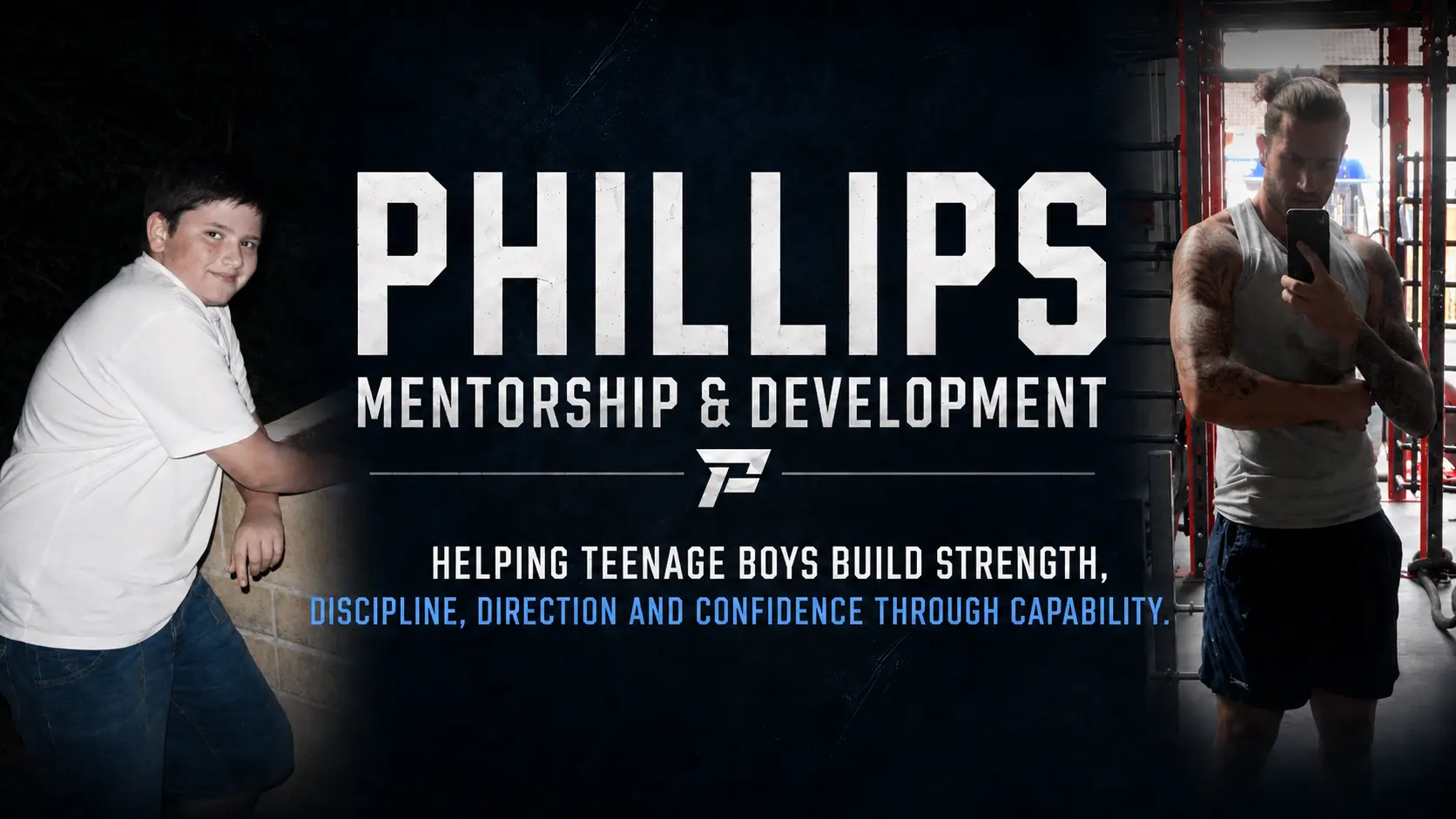
From roughly 11 to 19, I was overweight for much of puberty, heavily absorbed in computer games and without much motivation or direction. I knew I was capable of more, but knowing that and knowing how to change were very different things. Important years felt as though they were passing while my potential remained unused.
A before-and-after image compresses years into a single frame. The reality was slower and less dramatic: learning, experimenting, getting things wrong, returning after setbacks and gradually building better standards around training, nutrition, sleep, health, behaviour and discipline.
Physical training gave me some of the first clear evidence that deliberate action could change my life. But the deeper change was not simply losing weight or becoming stronger. It was learning that capability could be built, that responsibility could create self-respect and that confidence became more durable when I had evidence I could follow through.
The visible transformation matters. The more important transformation was becoming someone increasingly able to choose a direction, act on it and adapt when progress was difficult.
PM&D grew from a question I kept returning to: what might have changed if a credible adult had helped me understand these principles earlier, choose something worth pursuing and remain accountable while I learned to act on them?
Why the story belongs here
Josh understands the experience of drifting through adolescence, feeling uncomfortable in himself and gradually learning to live with greater intention.
A teenager may recognise something of himself in the earlier photograph and see that his current position does not have to define his future.
One personal transformation does not make Josh an expert in every teenager, guarantee the same outcome or mean boys should be shaped into copies of him.
What the experience taught me
It is not a waiting room before adult life. It is an important period for developing habits, judgement and capability.
Confidence becomes more durable when it is supported by evidence: skills learned, difficult actions taken and responsibility handled.
Young people should progressively experience responsibility as proof that they are becoming able to carry more—not merely as punishment.
Physical habits, attention, discipline, character, relationships and direction affect one another. They should be developed coherently.
Credibility without overclaiming
PM&D is mentorship and developmental education. It is not therapy, medical care, dietetic treatment, specialist coaching for diagnosed conditions or a replacement for appropriately qualified services.
Where a teenager’s needs fall outside PM&D’s scope, the right response is to say so and encourage the family to seek more appropriate support.